Wednesday, May 30, 2012

The Story of the Two Brothers – Revisited


King Solomon wanted to find a place build the Temple. A heavenly voice directed him from Mount Zion to a field that was once owned by two brothers. One of the brothers was a bachelor and the other was blessed with a wife and children. After the harvest each brother was concerned about the other. Under the cover of night the father kept adding to his brother's pile because he reasoned because he thought the bachelor had no children to support him in his old age. The bachelor added to the father's pile because he thought that with so many children his brother needed more grain. The brothers met in the middle of the field and embraced. This field, a manifestation of brotherly love, King Solomon reasoned this was best site for the Temple.[1]

In 1997, before Google searches and the wide-spread of digitalization out-of-print, a faculty member came into the library with a question about the source of the story about two brothers.  He was very learned in Talmud and other rabbinic sources, but his couldn’t find the source of the story.  He said that the story is so old that it must be from the rabbis. He thought that he remembered it from the Talmud, but couldn't quite remember the source. He wanted my help to find the source.

This article is both an update to the original and an examination of sources I didn’t have available then. 

The 1997 article is one of my most popular because it illustrates how people use stories without understanding their origins. I have referred people to this article because the Two Brothers story is so widely known.  In a recent rabbi’s sermon, the rabbi presented this story as if it was an old Jewish story.  Indeed it is a great example of familial love, honor and respect and how a place can have the honor of commemorate that story. The use of stories is an important part of speeches and sermons.  However, one can not represent a story for something it is not.

If a story is written as a parable to illustrate a point and if you claim the story has ancient, royal roots, it adds credence.   For example at the Yom Tov dinner table one guest told a story about a king who had a daughter who was so special that she was not allowed to have any contact with men before her wedding day. It took a long time for the king to find a groom who would marry the daughter without ever meeting her.  People at the table kept interrupting the storyteller saying, “That is terrible!”  “How can the king be so mean?”  The people listening were impatient.  The story was a parable.  It never happened, but was created to illustrate a point.  The king found a groom.  After the couple got to know each other, the groom asked for another wedding celebration, because at the first one he couldn’t fully understand the love of his life.  If the people listening to the story would have been patient, they would have learned the point to the story was that love is learned and does not happen by accident.

This story of brotherly love contrasts to the stories of brotherly rivalry such as the stories of: Cain and Abel, Yitzhak and Ishmael, Ya’akov and Esau, and Joseph and his brothers.  A story of brotherly love is rare.  There is a 2300 year old Egyptian tale of two brothers; the younger, conscientious one is accused by his older brother of a proposal of adultery against his wife.[2]

The story of the two brothers sounds like it is very old because it mentions King Solomon. (Remember royal and ancient add credence.) Since the events seemingly happened in Biblical times, one should first check the Bible.  The story is not in the Bible.  Since the story happened hundreds of years before the Talmud, one would next reason that the story should be found in the Talmud, Midrash, or other rabbinic literature.

A search of the Talmud and Midrash found nothing. We tried Hebrew and English terms such as “two brothers,” “Temple of Solomon,” and Beit Mikdash but found nothing. We wanted to verify the story to be sure that we weren't imagining the story. We tried Bialik's Sefer HaAgadah[3] and Micha Joseph Bin Gorion's Mimekor Yisrael. [4]

Micha Joseph Bin Gorion retells the story as, “A story of the Temple.”   There are no comments or notes. This story was hard to find because the title does not mention “two brothers.”

We looked in the index of The legends of the Jews by Louis Ginzberg (1873-1953). The story is found on page 154 of volume 4. Ginzberg quotes Israel Costa in Mikweh Israel,[5] no. 59 which says that Berthold Auerbach refers to this legend in his [Black Forest] Village Stories[6]. Ginzberg further speculates that the author may have been drawing upon an oral tradition from the Jews of Russia or Germany. The legend seems to be a midrashic exposition of Psalm 133:1 (How good and how pleasant that brothers dwell together.). Ginzberg is not sure of the source. I was unable to verify the reference that Ginzberg made to Black Forest Village Stories, however I found another reference in a book about Berthold Auerbach[7] (1812-1882)  written by Anton Bettelheim (1851-1930.)   He remembers his mother (died 1852) telling him the story saying that she learned if from a rabbi who was her father’s neighbor.

In Zev Vilnay's Legends of Jerusalem on page 77, he says that Israel Kosta (Mikwah Israel, 1851) relates a story of the two brothers. Vilnay says the legend first appears in the description of travels by Alphonse de Lamartine, Voyage en Orient, I, 1875.[8]

Both Vilnay and Ginzberg are unsure of the exact origin of the legend. The story is definitely not from Biblical or Rabbinic times. It may be a variant on a Russian or French non-Jewish legend. 

Compare this to the evidence in Tanakh (Bible). In II Chronicles 3:1 it says that Solomon built the Temple on Mount Moriah, which was revealed to David. Moriah is connected to Akedat Yitzhak (sacrifice of Isaac). Midrash Tehilim connects Adam and Noah to Mount Moriah. The site had kedushah [holiness] long before the time of King Solomon. This conflicts with the legend of two brothers.

Here are some additional published versions of the story.

Glass, Meredith A.  A tale of two brothers: a retelling of a Jewish folktale for young children.  New York, Bank Street College of Education, 1998.

Hebrew folklore from sidrach stories / edited by Steven M. Rosman. New York, UAHC Press, 1989 p. 19-20.
Smith, Cris, One city, two brothers. Cambridge, MA, Barefoot Books, 2007.

 “A tale of two brothers” in Stories Seldom Told: Biblical stories retold for children & adults / by Lois Miriam Wilson. Wood Lake Publishing Inc., 1997 p 55-56.  

“The two brothers” in The World Over story book / edited by Norton Belth.  New York, Bloch Publishing Company, c1952 p. 10-12. 

The answer to the bibliographic quest is the legend is not rabbinic and even goes against Biblical and rabbinic evidence. There is no recorded evidence of the story before 1835, however, by the time Ginzberg wrote his Legends of the Jews the story was well known. There is weak evidence that the legend is from Russian Jewish sources. We also learn that bibliographic references must be verified since Ginzberg and Vilnay made mistakes recording the titles of books. This is not the final word on the source of the legend because I have not yet located any sources of similar French, Russian or German legends. From this quest we learn that we should be careful about what we call ancient, Biblical, Talmudic or rabbinic.


[1] Sources for fuller versions of this story are listed end the end of this article.  

[2] The Ancient Near East: An Anthology of Texts and Pictures / edited by  James Bennett Pritchard, Daniel E. Fleming.  Princeton, NJ, Princeton University Press, 2010 p. 11.  (Page 12 in the 1958 edition.)  The British Museum web site has a summary of the story.   British Museum site has a picture of the papyrus scroll with the story : http://www.britishmuseum.org/explore/highlights/highlight_objects/aes/s/sheet_from_the_tale_of_two_bro.aspx

[3] Full reference:  Bialik, Ḥayyim Naḥman. ספר האגדה : מבחר האגדות שבתלמוד ובמדרשים == Sefer ha’Agadah : mivḥar ha’agadot shebi-Talmud. vibamidrashim.  Tel Aviv, Diver, 1967 (and other dates)  English translation: The book of legends : sefer ha-aggadah : legends from the Talmud and Midrash   New York : Schocken Books,  1992.

[4] Mimekor Yisrael : classical Jewish folktales. Bloomington, IN, Indiana University Press, 1976.  Vol. 1 page 491-492, no. 270.

[5] Vilnay spells the name as “Kosta”.  Full reference: Costa, Israel.  Sefer Mikveh Yisrael : ve-hu sefer sipure musar le-ḥanekh et ha-nearim …  Livorno : Belforte, 1851.

[6] The book has several stories about brothers.  In one story the brothers are feuding over the estate of their mother.  They reconcile and live in peace on harmony the rest of their lives.  In another the brothers always helped each other.  In the last scene of the story the majesty of God’s glory descends on them.

[7]  Bettelheim, Anton, Berthold Auerbach; der Mann, sein Werk, sein Nachlass.  Stuttgart, Cotta, 1907 p. 13-14.  May be read on the Internet  Archive:  http://archive.org/details/bertholdauerbac00bettgoog

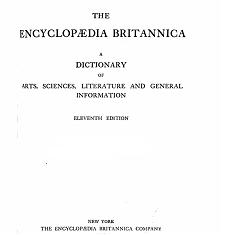
[8] Vilnay says that the story is on page 329 of the 1875 edition, but I was unable to locate this edition.  The book is a report of an 1832 journey that included the land of Israel, first published in Paris in 1835. I found via the Internet Archive (http://archive.org/details/apilgrimagetoho00lamagoog)  an 1848 English translation published by D. Appleton and Company.  Front CoverThe title page is the picture at the beginning of this article. After the story de Lamartine comments on page 284:
 What a lovely tradition! How it breathes the unaffected benevolence of patriarchal morals! How simple, primeval  and natural is the inspiration leading men to consecrate to God a spot  on which virtue has germinated  upon earth!  I  have heard heard among the Arabs a hundred of such legends. The air of the Bible is breathed  in all parts of this Earth.

This was a widely circulated book in both the original French and translations.  Note that the story is identified as Arab, not Jewish.

In Studies in Jewish and World Folklore by Haim Schwartzbaum (Berlin, Walter DeGruyter, 1968)  on page 462 are listed more sources.  Schwartzbaum says that the story appeared in the Arabic book of legends, Kalib wa-Dimnah in the prologue attributed to Abdallah ibn Al-Muqaffa (died circa 760).   I was not able to find an English translation of this book online or in an accessible library.

=============
Note:  Nov. 1, 2015  

This article seems to have a lasting effect on people  I was at a lecture this morning and I introduced myself to the person next to me.  He said that he knew me because he has often referred people to this article.  
 

Monday, May 7, 2012

Blog Statistics


Here are a few numbers

182 posts
123,126  page views
28, 435  visitors

Most viewed post: Card Catalog Drawers: 4038.


Thank you all and please keep sending comments and suggestions.

Setting an Example for Academic Research


In March I was adding the book, Introduction to International Disaster Management / by Damon Coppola[1] to our library catalog. Generally librarians do not read every book that is added to collection and the cataloger does not need to be an expert in every single subject represented in the collection.

Earth from outer space.
In a random flipping through the pages I noticed a chart, “Select Maritime Disasters…” on page 99 with Wikipedia listed as a source. First using Wikipedia as a source is a red flag.   We teach our students to use all the tools to discover information, but no teacher will allow an article from Wikipedia as a source for an academic paper.[2]    The chart on page 99 is for maritime disasters. It includes ships that were sunk as a result of accident, weather, and acts of war. I would not call war an accident. If one checks the full reference in the back of the chapter on page 137, the author claims the title of the article checked was "List of epidemics." Maritime disasters are not epidemics. When I checked the Wikipedia article on maritime disasters, I found many discrepancies between the facts in the book and what is in the article.  If the author searched news and other accounts of the disasters and made his own charts no references would have been needed. [3]

There is a place for reading and learning from general encyclopedias such as Wikipedia and Encyclopedia Britannica. A law professor friend used Wikipedia to help provide references that he knew as common knowledge, but his publisher wanted a published source. Students may use an encyclopedia to learn general facts that help shape and focus their research.  They could also find sources and ideas more efficiently than some other kinds of searching.  Scholarly encyclopedias are written by top people in their field and the articles included are the equivalent of publishing in a scholarly journal.  These scholarly articles include bibliographies and are signed.

I did not review in detail all the sources in this book. The lists of references have a pattern of sloppiness and failure to understand the process of gathering and assimilating information to turn it into knowledge.  This is enough for me to put this book on the not recommended list. In general the citations in this book are imprecise and possibly wrong.

The author does not have the correct author format in most of the citations without personal authors.  For example he confuses concept of corporate authors and publishers. In other citation he fails to find the personal authors when they exist in the document. 

On page 134 of the list of references

About.com. (2006) Cyberterrorism. Web site: terrorism.about.com/od/protectingtargets/a/cyberterror.htm.

“About.com” is a publisher.  On page 125 of the text the author quotes the FBI’s definition of cyberterrorism and the source is “About.com.”  This quote has been widely published and could almost be considered common knowledge. The author possibly could have paraphrased the idea without recognizing a source. This quote is in Denning, Dorothy E. “Activism, Hacktivism, and Cyberterrorism: The Internet as a Tool for Influencing Foreign Policy.” Info War Online. 4 February 2000; from www.iwar.org.uk/cyberterror/resources/denning.htm.  The original source was an article by Mark M. Pollitt,  “A Cyberterrorism B Fact or Fancy?” published in  Proceedings of the 20th National Information Systems Security Conference, October 1997, pp. 285-289. If Mr. Coppola wanted to give an adequate citation, he would have tracked down the quote as I did. 

Mr. Coppola’s second reference:

Air Safe. (2003) Top ten airline safety questions.  www.airsafe.com/ten_faq.htm.”  

 “AirSafe.com” not “Air Safe” is the name of the organization publishing the web site.  The author’s name is Todd Curtis.  Coppola not only didn’t record the correct author but did not even record the correct name for of the publisher. He also got the date wrong.  At the bottom of the web page is: “Copyright © 2011 – 2012” This is not 2003 as Coppola records.

The fourth reference:

Associated Press. (2005) Some deadly train disasters since 1900 (July 12). www.msnbc.msn.com/id/8557709

The Associated Press is a distributor of news stores, not an author.  MSNBC as a subscriber choose to publish this story.  Since MSNBC does not have stable URLs, URL listed above no longer works.  Fox News on their web site (http://www.foxnews.com/story/0,2933,154497,00.html) has an article “Fast Facts: Deadly Train Disasters” dated April 25, 2005 that is sourced from the Associated Press.  The article is also published by High Beam Research (http://www.highbeam.com/doc/1P1-107832223.html), but it is behind a pay wall. CBS News published the story and put the information in a chart form. (http://www.cbsnews.com/elements/2004/04/22/in_depth_world/timeline613204.shtml). They could possibly be the article Coppola is referring the reader to.  Since news media may give wire service articles their own headline and title, it is impossible to be certain what article Coppola is referring to the reader.  That is why quoting from an online news source is difficult or imprecise and needs a date of retrieval.  It is better to quote an article from an outline database because the reader is better able to check it.

A list of facts or a directory is not protected by copyright (see footnote 3).  The arrangement on the page may be protected, but the facts are not.  Coppola could have gathered the information and not credited any source.  His chart would be protected as part of the book, but not the actual fact.

Coppola’s list of references has several ways of recording of URLs for web sites -- sometimes it uses “www;” sometimes http://, sometimes both and sometimes neither.  While most of the time the “WWW” may be optional when typing a URL in a browser address line, if one makes a mistake between “HTTPS://” and “HTTP:// “ the user will get an error message. To help the reader who is copying and pasting, the URL’s correct protocol should be recorded. Evidently the copy editor missed this inconsistency. 

I don't even need to check every citation to see many more mistakes. "n.d." meaning "no date" is not acceptable for a citation While APA style allows “n.d.”; it is ill-advised.  . One can always make an educated guess for a date.  There are ways to make estimates of dates.

Coppola has one reference entered under “U.S. Government Accountability Office.”  The correct name is: “United States. General Accounting Office.”

Since web sites can change at any given moment, it is important to include a date of retrieval. If needed the searcher could use the Wayback Machine (Internet Archive  http://archive.org/)  to view an older version of the web site.  It is always better to use stable sources so that the reader can do his/her own checking or follow up.  APA style does not require retrieval dates for articles from databases since one may also check print sources or another database.

On Apr 26, 2012 I heard from Pamela Chester, the acquisitions editor from Butterworth-Heinemann, an imprint of Elsevier, who acquired this textbook.   (I numbered the paragraphs and corrected her mistakes for easier reference.)  

1.  “I would like to set the record straight. The use of Wikipedia is not "forbidden" in academic publishing, as Dr Stuhlman contends. While it is not a source we recommend for high-level scientific or technical information, for facts that are common knowledge like historical events (including the list of selected maritime disasters this review refers to) there is no hard and fast rule about what source to cite, if any. It could be argued that no source is even necessary for such facts.

2. This reviewer is completely mistaken in his comments on Damon Coppola's use of the APA reference style, which is what we required for this book. If you consult any guide to this reference style, you will see that the abbreviation "n.d." (no date) is mandated for an undated source. Similarly, dates are not part of the citation for websites in this reference style. Mr. Coppola has scrupulously followed the requirements of APA in his citations. The book was also professionally copyedited before publication to ensure consistency in the use of this reference style.

3. His final comment is puzzling. Is this reviewer suggesting that we exclude material accessed via the internet from scholarly publications? That position seems to me untenable when such a wealth of sources is available online.

4. I would urge that potential readers make their own assessment of this book's content. It would also be preferable if reviewers read the book-something this reviewer admittedly did not do-and check their facts before posting responses on Amazon. “

As a librarian in academia I can assure Ms. Chester that teachers do forbid the use of most general encyclopedias including Wikipedia as sources in academic papers. Many teachers will refuse to accept a paper if the student quotes or cites Wikipedia. It has taken me years to convince faculty that students should be allowed to look at scholarly encyclopedias. Some teachers erroneously tell student not to use the “Internet” and I translate that to, “don’t use unreliable online sources retrieved from the Internet or any other source. “ Most faculty don't forbid materials published on the Internet, but limit the use of all kinds of biased and unreliable materials and information sources. Most teachers will tell students to use a variety of materials such as web sites, scholarly articles, books, and magazines. Since student think using a web search is so easy and retrieves lots of hits, librarians and other faculty have to teach how to use the results as a part of academic research.  Most students do not realize web searches only find a small portion of published information. 

Just because APA style is followed does not make it right. APA style violates several principles of library cataloging and hinders library searching. Library catalogers would almost never leave a resource totally undated. The only time something would be undated is when the source had no internal clues, was sloppily prepared, or the publisher purposefully wanted the work to have an ambiguous or unknown date. Even if the cataloger only knew the century, this would be recorded. Since APA style violates the idea of name authority, checking authors and name sources is not always easy.[4] Name authority is essential for distinguishing one author from another. Publishers are not authors; yet Coppola’s list of references frequently confuses them which means he did not follow APA style (or any other style.)

The bibliography is a record of the foundation an author uses for his/her work. If one chooses solid sources it is as if he is standing on the shoulders of giants. If the sources are suspect or incorrectly documented, I can not accept the work as reliable or carefully prepared. If I am not an expert in disaster management, I can only judge the book by what I am an expert in -- bibliographic information.

I did consult other librarians about the concepts of bibliography and references and they concur. The author and editors obviously did not consult a librarian or college professor. Potential readers could follow Ms. Chester’s advice and view a selection of this book via Google Books.   Elsevier’s web page for this book reprints several reviews of this book.  They are all descriptive and they could have been written from examining the table of contents and skimming the pages.  There is not one sentence of critical analysis of the book and its topic even the sources could be considered written for the disaster recovery professional.

I am not going to remove this book from the library collection because that would be an act of unsupportable censorship, but I did make a note in the catalog record that the book may be unreliable. Since students may want to copy an idea or example from a book, we do need to be aware that some books and publishers are more reliable than others.  It is the job of librarians and other teachers teach the critical thinking skills that will make students into critical thinkers and life-long learners.


[1] Full citation: Coppola, Damon P. Introduction to International Disaster Management . 2nd ed.  Boston [Massachusetts] : Butterworth-Heinemann, an imprint of Elsevier, 2011.

[2] I consulted with other librarians and faculty on this.  They unanimously agree that Wikipedia is not a good source for an academic paper. 

[3]  In a previous blog article published on January 4, 2011, “What is Copyright? Part 4 : What can you protect under copyright law?”  (http:// http://kol-safran.blogspot.com/2011/01/what-is-copyright-part-4.html) I discussed the case of Feist Publication, Inc v. Rural Telephone Service Co  (499 U.S. 340 (1991))  http://www.law.cornell.edu/copyright/cases/499_US_340.htm  This case  decided that the list of names and numbers in the form of a directory are not protected by copyright.  While the case was dealing with a phone directory, I believe that lists of facts that anyone could gather from publicly accessible sources are not protected by copyright.  Had the author taken the time to assemble his own list it would not require attribution or a footnote.  Only if he copied the exact list and format from another source would attribution be required.

[4] The example I give is I have two children with names that begin with the same letter.  I would never want anyone to confuse a work written by one for the other.

Saturday, March 24, 2012

Goodbye Paper Encyclopedias?


I wrote in this blog in November 2010[1]   about how  getting to “yes” is better than outright forbidding of something.  Some teachers from elementary schools to colleges say “don’t use encyclopedias” or “don’t use the Internet.”  When answering a reference question I translate this to, “don’t use unreliable resources without understanding their bias and measuring reliability.”  If teachers forbid something it makes it sweet, forbidden fruit that students want even more.

A friend told me about the school that her grandchildren attend forbids home Internet use.  A few years ago one college teacher forbade her English 101 students from using the Internet to do research for school papers.  These teachers are limiting their students’ abilities to interact with the world of research.  I worked with this college teacher for three years to show her that the Internet is a tool and the library databases are the way to access scholarly journals.  The librarians show classes how to use electronic resources as a research tool to increase the students’ ability to learn and do the research assignments.

On the other end of the spectrum an elementary school librarian told me that the teachers in her school don’t understand the basics of research.  In a fourth grade class students used only Google to find background material for their research papers. They did not use the library, encyclopedias, or library databases.  The librarian said that the projects were watered down and taught very little about the critical thinking skills that fourth graders should be learning. When mentioning this to the teachers, they just didn’t understand the problem.

Scholars and I also mean students of all ages should have a whole toolbox full of possible research tools. The tools should match both the task and the needs of the student. One should not just dismiss a whole class of materials and also one should not depend on just type of resource.

In a well designed curriculum getting to "yes" in multiple ways or paths is better than forbidding an action. If the “Internet” is forbidden, students will still find some way access it and then will be turned in liars. If the school figures out a way to permit something, it can be more easily controlled. Saying "yes" indicates more trust than "no."

In the days before electronic data bases, we only had paper based databases such as encyclopedias, handbooks, and directories.  When I was in elementary school we got a visit from a door-to-door salesman selling an encyclopedia.  He used all the techniques to show how owning an encyclopedia will help with school work.  We bought the encyclopedia and I read through every volume.  It was part of my recreational reading.  It was not the only encyclopedia that I read.  We had another set that was aimed at younger children. 

Encyclopaedia Britannica published its first digital version in 1981.[2] In 1998 I got a copy of the World Book Encyclopedia on CD-Rom.  I also looked at copies of Microsoft’s Encarta. I tried several other CD Rom based encyclopedias, but never found one that was totally satisfying.  These were powerful, yet limited tools.  They were more current and more portable than print versions, but lacked to ability to browse, read systematically,  and discover knowledge by serendipity. While the makers added audios and visuals that were not possible in paper editions, the text was either the same as the print editions or was abbreviated.  Sometimes the articles were too short and not very compelling to help in research. 

General encyclopedias frequently lack the depth of coverage that is needed for a researcher. The purpose of a general encyclopedia is to give background on large selection of subjects. Subject or scholarly encyclopedias have articles written by experts and have bibliographies or advice for further readings. The articles in these specialized encyclopedias are sometimes at the level of a scholarly journal article. An exercise I give when teaching about reference services is to read and compare similar articles in different encyclopedias and discuss their bias.  An example exercise is: read the article about New York City in the Catholic Encyclopedia, Encyclopedia Judaica, World Book, and Encyclopaedia Britannica. Each article will have a different focus and present their part of the general picture.  None will be enough for all you want to know about New York City.

On March 13, 2012 the Encyclopaedia Britannica announced that it would cease publishing on paper. This was a business decision based on competition from Wikipedia and other free online encyclopedias.  The company publishes many other books and electronic resources such as Compton Encyclopedia for the middle school and high school age students and Britannica Illustrated Science Library for children in grades 5-9[3].   They market these encyclopedias to the home markets.  Since the CD-ROM based Encyclopaedia Britannica[4] is $29.95, few people want a multi-volume 100+ pound encyclopedia sitting on their home shelves costing $1395. The CD-ROM comes with access to the web-based information service that can be accessed on a computer or mobile device. Buyers get a CD-ROM to hold and the current content of an online resource.

The strengths of electronic and paper based encyclopedia are also their chief weaknesses. In an ideal library or home one would have choices based on the needs of the researchers.  Let’s examine from a librarian point of view each of the statistics that Statista has discovered (http://mashable.com/2012/03/16/encyclopedia-britannica-wikipedia-infographic/)    

Sales of the print edition of the Encyclopaedia dropped from 120,000 in 1990 to 40,000 in 1996 to 8,000 for the latest printing.  This parallels the growth of online encyclopedias.  The 8,000 sets sold generated about $11 while the Wikipedia Foundation (http://wikimediafoundation.org/wiki/Home) collected, according to their annual report[5] for July 1, 2010- June 30, 2011, $24,785, 000 in contributions and other income. They have 80 employees to support 423 million unique site visits.   The Encyclopaedia Britannica company is privately held and does not publicly report its financial figures.

Features

Cost

The online Britannica costs about $70 per year.  The print version costs $1395.  Wikipedia is free.   Libraries subscribe to many databases that cost in the tens of thousands of dollars per year. We usually tell students that you get what you pay for.  Value is added by editors and selectors. The value of anything is based on the need it fills in the minds of the consumers.  If you don’t want to spend money Wikipedia wins. If you want the services Britannica offers, it wins.  There is no clear winner in this category. 

Number of articles

Britannica has about 65,000 articles selected by experienced editors and written in English by experts.  Many of the experts are well-known scholars.  Wikipedia has more than 3,894,000 articles in written in English.  43 other languages have at least 100,000 articles written.  Wikipedia wins on the number of articles, but numbers are not an accurate indication of value.  One well written article is more valuable than 1,000 trivial or useless articles.  Too many articles is just as bad as too few articles.    Since more is not better, there is no clear winner.

Size and Weight

The 22 volumes of Britannica weight about 129 pounds. The Cd-Rom version weighs about 2.5 oz. [6]  If you use a tablet or handheld device to access the Web, the weight is 1 -2 pounds.  The print version is the loser because no one can carry all the volumes at once.

Number of Contributors

Britannica has about 4,000 contributors including leading scholars and Nobel Prize winners.  Anyone can write or edit a Wikipedia article.  Most contributors write anonymously.  Signed articles by scholars and vetted by editors beats large numbers of anonymous contributions.

Accuracy

Wikipedia has millions of readers who can correct problems the moment they are discovered.  There is no editor vetting the contributions.  While people may write bias or “fluff” articles; critically reading them requires the same analysis as reading print articles.  Many articles have been written comparing the accuracy of Wikipedia compared to the Britannica.   Reid Goldsborough in “Internet Encyclopedias in Flux” [7] says “Wikipedia is far from perfect… as with all information used for important purposes, is to vet it by seeking multiple sources.” In a December 2005 article in Nature[8], it was reported that the differences in accuracy between Wikipedia and the Britannica is not great. Since 2005 Wikipedia has taken steps to increase reliability.  Changes are tracked so that any reader can see the history of changes.

While Britannica is considered the “gold standard” of encyclopedias, yet it is no more accurate than articles on the same subject in Wikipedia.  Wikipedia has the advantage of being up to date; Britannica has the frozen thoughts of the writers.  

There is no clear winner as to what source is most accurate.  The level of reliability should be judged by comparing sources. Even so-called experts can put information in an incorrect light. Two people could observe and report about an event without mistakes and still the reports could be wrong according to the even planners.  For searches that only want background information, either source will work.  For searches that demand accuracy, one needs to triangulate three or more sources.

It is a window to the world at the moment of publication. Paper is more durable than electronic storage and one does not need any electronic devices or the Internet to read a piece of paper. If you want to understand the world of a particular year, the print version is clearly the winner.  You can even purchase the facsimile version of the 1768 edition of the Britannica.  The 1911 edition has been digitized and is available for free from Google Books or the Internet Archive. 

If you want an article that reflects something that happened today, the online version is the winner.  If you want historical context or a window to another time and place the paper edition is the winner.

By their very nature encyclopedias must be used with care in serious research.  They can not be the end point of your research. It is easy to fall in the trap of free online resources.  Information gathering, recording, storage and distribution cost money.  While cataloging the book, Introduction to International Disaster Management, I noticed a chart on page 99 with "Wikipedia" listed as a source.  First "Wikipedia" is neither a personal or corporate author. "Wikipedia" and other general encyclopedias as an authoritative source in an academic book or paper are generally forbidden.  We teach our students to use all the tools to discover information, but no teacher will allow a citation from "Wikipedia."  The chart on page is for maritime disasters. It includes ships that were sunk because of acts of war. I would not call that an accident.  If one checks the full reference in the back of the chapter on page 137, the author claims the title of the article checked was "List of epidemics."  Maritime disasters are not epidemics.  When I checked the Wikipedia article on maritime disasters, I found many discrepancies between what is in the book and what is in the article.

The author not only used a flawed source, he incorrectly cited the source, and did not even copy the correct numbers from the original article.

I hope that paper based reference books will continue to be created.  Publishers should be using both electronic and paper to distribute content.  Each has its advantages and weaknesses.  It is not time to say “goodbye” to paper based content, but time to say, “Let the consumers have choices.”


[2] According to their web site, “Brands and Divisions,” http://www.corporate.eb.com/?page_id=98

[3] From the EB web site: http://store.britannica.com/collections/kids/products/britannica-illustrated-science-library-2009-edition,  “This product is only available to individual consumers and is not valid for school, library, or resale purchases. “   The company has other web pages (http://info.eb.com/html/print_compton’s_by_britannica.html ) to market their products to schools and libraries.  They have different prices and pitches.

[4] Although is in not perfectly clear from their web site, the CD-ROM is probably not the full text of the print version of the Encyclopaedia.

[6] According to Mary Ellen Quinn in “Encyclopedia Update, 2010”  (Booklist 108, no. 2 ,September 15, 2011: p. 50-52.) a review of encyclopedias she says that the CD-ROM versions of encyclopedias are long gone.  Since the CD-ROMs are still sold by the Britannica she is mistaken.
  
[7] Goldsborough, Reid. "Internet Encyclopedias in Flux." Tech Directions 69, no. 2 (September 2009): p. 12-13.

[8] "Wiki's wild world." Nature 438, no. 7070 (December 15, 2005): p. 890. Giles, Jim. "Internet encyclopaedias go head to head." Nature 438, no. 7070 (December 15, 2005): p. 900-901. 

Reported also in: "Nature gives thumbs up to Wikipedia. (cover story)." Information World Review no. 220 (January 2006): 1. Library, Information Science & Technology Abstracts.
================
Comments received via e-mail  Included with permission.


I LOVE your point of getting to YES.  I am stealing that. LOL

I truly see research in similar light as you do.  Excellently posited.  Bravo!

Diane Meyer
Houston, TX
 
  I agree- but the first thing I wanted to shout when I read your e-mail and post is: Databases aren't the same as "the
 Internet"!!!  (not that you think they are, but our students and teachers often do) I spend a lot of time with both teachers and
 students reminding them that freely accessible websites are not the same as subscription databases and that the information in the
 databases COULD be found it a book/magazine/newspaper but my library isn't big enough and we don't have enough money to buy all of those
 resources so we allow them to see them via the databases.
 
 I know that this is a simplistic explanation, but It's the way I've chosen to go. In fact, I'm presenting on this to our PTO tomorrow night!
 
 
 Genevieve Gallagher
 Charlottesville, VA
 

Sunday, March 4, 2012

Spellbinding, Yet Clueless


New President Interview -- Part 12*

  
Q> When you were in college Dr. Laurence J. Peter (1919-1990) wrote the book, The Peter Principle : Why Things Always Go Wrong (1969). You wrote a paper that was later published saying that what they said was not new.  You traced the idea that competent people get promoted to a level of incompetence appeared in 1767 in the comedy  Minna von Barnhelm by the German playwright,  Gotthold Ephraim Lessing[1]. 

 A> In Lessing’s drama, the character Major von Tellhein suggests that Paul Warner (an old sergeant) should become something more than a sergeant. Warner answers, “To become something more than a sergeant! I do not think of that. I am a good sergeant; I might easily make a bad captain, and certainly a worse general.”    Warner knew that everyone has his own level of comfort and competence.  

I was young[2] when I wrote that paper yet I understood the roots of the Peter Principle are in the book of Deuteronomy 16:18 “Judges and officers shall you appoint for yourself”, and  the next verse, “You shall not plant for yourself an Asherah of any kind of tree”   Asherah is a tree associated with idolatry. Anything connected to idolatry totally forbidden. An organization is responsible for appointing people to the right positions and making sure they are competent. The point at which an employee is no longer able to perform at with competency, demonstrates the Peter Principle.  At the time I didn’t understand the connection between connection between the hiring agent and a level of competency.

Q> I’m a little lost.  What have you learned since you wrote the paper about the process to hire competent people?

A> Remember I wrote the first article as an undergraduate almost 40 years ago.  I understood literature and history more than I understood management.   The teacher, Resh Lakish, in the Babylonian Talmud Sanhedrin 7b: explains the Biblical verse in such a way to show us that the appointing or hiring body has a pivotal role appointing the best judges.  An organization must appoint people to the right jobs.

For example a person who gives spelling binding speeches and tells people what they want to hear may get elected to a high political office, but giving great speeches does not indicate an ability to govern, make decisions and lead.  An arrogant leader, who does not recognize his or her limitations, soon will reach a level of incompetence and drag down the entire organization.

A good speaker with a command of language and the material is but one indication of competence. One has to be articulate, but spell binding is not a requirement.  Sometimes the speech is all we have to judge someone, but actions speak louder than words.

In another college, where a friend is the librarian, the dean who supervised the library was really quite clueless as to what is required for a library to function.  Based on postings in library listservs this is not uncommon.  The business functions of the library are very different from an instructional department.  Instructional department budgets mostly consist of personnel.  Libraries need to purchase books, databases, and other resources so they can serve everyone in the college.

I encouraged all the deans and program directors meet with the librarians to figure out ways to be on the same team.  When we conducted a search for new assistant dean of instruction, we found several candidates who had not been in a library or used library resources in such a long time, they couldn’t their last visit.  These candidates had not written an academic paper since they left college. These candidates never made the first cut.

Q> How does this translate to the College? How does the College make sure people are in the right positions?

A great teacher or professor does not make a great dean. Someone who knows how to say the right things at the right times may advance to higher and higher positions, but that does not mean they are competent.  Part of the job of an administration is learning how to make people feel good who work for you. That is motivation.  It’s my job as president to make sure my department head have the tools to get their jobs done.   Competency requires the worker to use the tools and produce value for the organization.  If the tools are not working, it is hard to do a good job.  People get frustrated when they have faulty equipment or systems. 

Good leaders know how to choose team members who complement each other.  A manager needs to trust the people s/he works with.  Team members know they can’t all have the same knowledge, background and expertise.  Team members know how to share information so that the team works as a single body 

 Q> How does sharing information help the team?

Imagine someone walking into a college building for the first time and needing to attend a meeting.  This visitor does not know which room to go.  The person asks the security guard for help.  In team player organization, the security guard would have the tools to either tell the visitor where to go or know how to find a person who could help the visitor.  In a customer centered organization, any staff member should be able to help a visitor or caller find the right place to be or find the phone of someone who can.

I once visited a college for a meeting.  I was told to meet on the first floor of the building and someone would come to get me.  I asked which building.  And they said none of the buildings have names or numbers on them.  Since I was meeting with a librarian, I found the building with the library and waited at the desk near the entrance.  The appointed time came and no one showed up. I asked for help in the library and no one knew where the person I was meeting could be found.  I was finally told, I was in the wrong building.  This was an information failure.  Not only did they fail to give me accurate and precise information, the college was not properly marked, and no one knew how to help me.
Projects within the college need to pay attention to how they impact both the students and those who deliver services to the students.  After several shootings at universities the College made a plan for emergency notifications.  This system, in place before I joined the college, is used to inform students, faculty and staff of any urgent situations.  For example when the College closed because of a winter snow storm, the system was activated.  

All the photocopiers in the College were replaced in January.  This was a huge project that impacted to way we do business in every office.  Before I approved the project I insisted that we include a notification plan for everyone involved including the students.  I did not want anyone to be surprised.  Training to operate the new copiers was begun before the first one walked through the door.  It amazed me that the project leaders did not even think of how to communicate the changes.  This is an example of a time that I had to be very insistent so that we can be more of a team.

Q> Is there a cure for the Peter Principle?

It depends on what you mean by a cure.  People need tools to succeed.  The tools include things they can hold and touch and systems and procedures that are intangible. We need to continuously identify the skills and tools needed for success. We need faculty development to show them both how our organization works and encourage them to attend classes, workshops, and training sessions so they keep up with the profession and meet fellow professionals in similar organizations. We need to fund ways to let they do research, writing and study. We need to find ways to get to “yes.”

If an employee performs well we need to find ways to make sure they do not become disillusioned and stagnant. We have to separate the ability to spellbind the audience from the skills needed to get the job done. The ability to carry out the duties and responsibilities should be primary reason for getting appointed to a position. Before a promotion, one must show the ability to perform the new duties of the job.

Q>  What is the cure for being clueless?

Learning never ceases.  When one completes one area of learning, it is time to start new learning.  In other words, never stop learning. "He who adds not to his learning diminishes it." [3] One must always be aware that we are knowledge workers.  One person does not know everything and you can not expert your associates, colleagues, or student to be mind readers.  If someone in the organization is not asking questions, no one is learning enough.    "There is only one thing more painful than learning from experience, and this is not learning from experience." [4] One must not only understand the organization, but never stop learning outside of what you are competent in today. 

The head of the organization must set the example for those who work below.  I was impressed last week when I heard a scholarly lecture from the dean and chief academic officer of a college.  Not only was he an excellent administrator, but also and expert in and aspect of 16th-17th century German history.

Someone who is considered clueless is not making connections between areas of knowledge.  The cure is to learn about areas outside your department and area of comfort.
 
Q> Thank you very much for sharing your thoughts.


*Part twelve of an imaginary interview with the recently appointed president of the College.   Note this is just for your information and edification. Any connection to a real college president is strictly coincidental.
 
[1] I used an e-book from Google books.  Full citation:  Lessing , Gotthold Ephraim. Minna von Barnhelm / with an introduction by Edward Brooks. Philadelphia, D. McKay [1899].

[2] Remember I was Bible major.

[3] Rabbi Hillel in the Talmud, Avot  13:1.

[4] This thought is often attributed to Laurence Peter, but it seems to have first been written by Archibald McLeish, poet, writer, and Librarian of Congress. There are at least 40 books that include this quote, but none give the name of the original source.

Monday, February 27, 2012

Most Fascinating Blog of 2012


My blog was nominated for The Most Fascinating Blog of 2012 in the category of librarian blogs.

accelerated degrees
Vote for me using URL http://www.accelerated-degree.com/2012-fascination-awards-librarian-blogs/ Choose "kol-safran.blogspot.in/" Thanks,

Sunday, February 26, 2012

Remembering My Father


Memories play tricks on us. Sometimes we remember exact details and sometimes we can’t even remember what year something happened without using a clue. It’s been ten years since my father died. I have a picture of him and his father looking over me in my study. The pictures are there to remind me that they came before and they are my teachers.

This past week (Feb 21) was the anniversary of the death of the person whom my college is named after. He was a powerful speaker for the black community. He was controversial and eventually killed by his rivals. While I don’t agree with much that he preached, I do believe in following Perke Avot 4:1 “Who is wise? One who learns from all people. “ I prepared one page guides with quotes, book, and web sites.

Since I sold the idea that one should learn to commemorate a yahrtzeit to the college library, how could I do anything less for my father. It is common to learn in honor of the memory of parents and other relatives. This past Shabbat was one of song. I heard the Tel Aviv Cantorial Friday night services and they sang at dinner. I missed the luncheon. The rabbi talked about the power of song. Song can stir one’s soul more than plain words.

My father loved to sing in the choir and perform for the Yiddish Theater in St. Louis. I made a video with a recording of one of his songs to use as the background to a montage of his pictures. The last five seconds I grabbed “to life” from another song. Visit: http://www.youtube.com/watch?v=evQP-T9CfPw  to see the video.